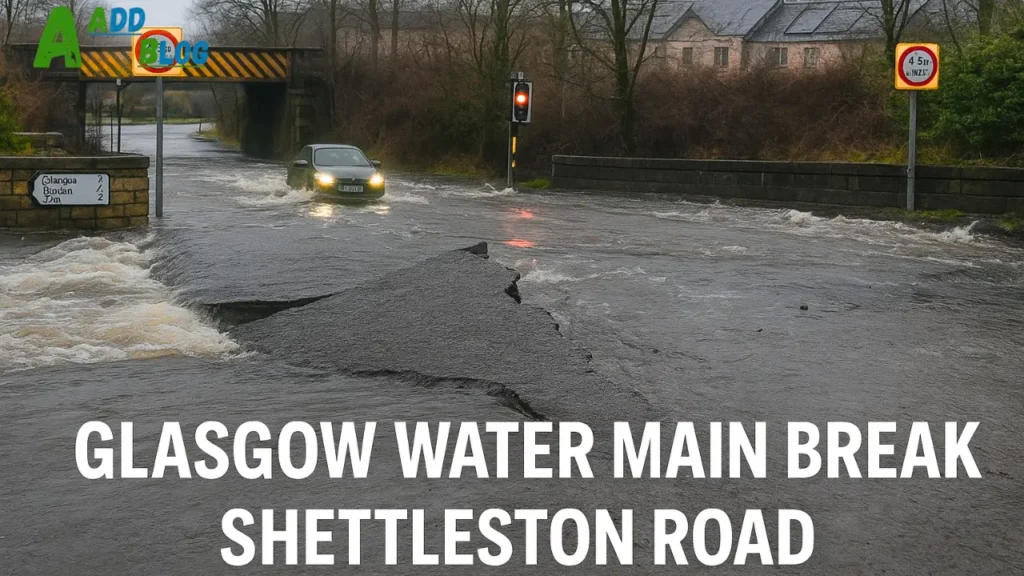

In late September 2025, the city of Glasgow Water Main Break Shettleston Road faced an unexpected infrastructure emergency that disrupted daily life across the East End. A major water main burst beneath Shettleston Road, one of the area’s busiest routes, sending water surging across the carriageway and cutting off supply to thousands of homes and businesses. What began as an ordinary weekday quickly turned into a citywide talking point, highlighting both the vulnerability of aging infrastructure and the resilience of a tightly connected community.
Water is a basic necessity that often goes unnoticed—until it disappears. For residents and businesses around Shettleston Road, the incident was a stark reminder of how dependent modern cities are on unseen underground systems that keep everything running smoothly.
What Is the Glasgow Water Main Break Shettleston Road?
The Glasgow water main break on Shettleston Road refers to the rupture of a significant underground water pipe located beneath this major East End thoroughfare. The burst caused immediate flooding between Old Shettleston Road and Fernan Street, forcing road closures and traffic diversions to ensure public safety.
According to initial assessments by Scottish Water, the most likely cause was aging infrastructure. Many pipes in older UK cities have been in place for decades, enduring constant pressure fluctuations, corrosion, soil movement, and vibrations from heavy traffic. Over time, these stress factors weaken pipe walls and joints, increasing the risk of sudden failure.
When a high-pressure water main bursts, thousands of litres of pressurised water escape rapidly. This can erode surrounding soil, undermine road surfaces, and overwhelm drainage systems within minutes. In Shettleston, torrents of water spread across the road, creating hazardous driving conditions and forcing authorities to close affected sections immediately.
Immediate Effects on Residents and Businesses
For many residents, the first signs of trouble were sputtering taps, low water pressure, or discoloured brown water caused by sediment being disturbed in the pipes. Shortly afterward, supply was completely cut off in parts of the G32 postcode area as valves were shut to isolate the damaged section.
While isolating the leak was essential to stop flooding and begin repairs, it left thousands without running water. Households struggled with basic tasks such as cooking, cleaning, and bathing. Many turned to bottled water until normal service resumed.
Local businesses were also heavily impacted. Cafés, restaurants, hair salons, and laundrettes—especially those dependent on a steady water supply—were forced to close temporarily. For small independent traders, even a single day of closure meant lost income that could not easily be recovered. Restaurants faced strict hygiene regulations that made operating without clean water impossible.
Traffic disruption added another layer of difficulty. Shettleston Road is a vital commuter route, and its closure led to congestion across surrounding streets. Bus services were delayed, delivery drivers faced detours, and commuters experienced extended travel times.
The Economic and Environmental Ripple Effect
Beyond the visible flooding and service disruption, the economic consequences extended further. Emergency repair costs, traffic management measures, and potential insurance claims for property damage placed financial strain on both public authorities and affected individuals.
Environmental concerns were also raised. Escaping water mixed with road debris and runoff before entering drainage systems. Although the environmental impact was localized and managed quickly, the incident reinforced how infrastructure failures can carry secondary consequences beyond the immediate repair zone.
This event sparked wider conversations about long-term funding models and investment priorities for water infrastructure. As climate change introduces more extreme weather patterns and temperature fluctuations, underground systems face additional stress, making proactive upgrades increasingly important.
Emergency Response and Repair Efforts
The response from Scottish Water was swift. Engineers arrived on-site to assess the damage, shut off surrounding valves, and prevent further water loss. Their priority was to ensure public safety and prevent road collapse—a real risk when escaping water creates underground voids.
Traffic management teams worked alongside local council staff and police to cordon off affected areas and implement diversions. Although disruptions were unavoidable, coordinated efforts minimized the risk of accidents or injuries.
Repair crews excavated the damaged section of pipe, assessed the extent of corrosion, and replaced it with new infrastructure. Work continued around the clock to restore service as quickly as possible. Once repairs were completed, water supply was gradually reinstated.
Residents were advised to run cold taps for several minutes to flush out sediment and air from the system. Water quality testing confirmed that once clear, the water met all safety standards.
Community Resilience in Action
Despite the inconvenience, the Shettleston community demonstrated remarkable resilience. Neighbours shared bottled water and information updates. Businesses that remained open offered facilities to those affected. Social media groups became hubs for real-time updates and support.
The sound of heavy machinery working overnight became a symbol not only of disruption but also of progress. Within days, most services were restored, and normal routines began to return.
The incident strengthened public awareness about infrastructure maintenance and emergency preparedness. Local councillors called for audits of other potentially vulnerable sections of the network, while residents demanded clearer communication protocols for future disruptions.
Lessons for the Future of Glasgow’s Infrastructure
The Glasgow water main break on Shettleston Road was more than just a burst pipe—it was a wake-up call. It highlighted the fragility of aging infrastructure and the cascading impact that failures can have on modern urban life.
City planners and policymakers now face important decisions: continue reacting to emergencies as they arise, or invest proactively in modernization. Smart water systems equipped with sensors to detect pressure fluctuations and micro-leaks could help identify weak points before catastrophic failure occurs.
While infrastructure renewal requires significant investment, the economic and social costs of repeated disruptions may be even greater. The Shettleston incident has strengthened calls for strategic upgrades that ensure long-term reliability and resilience.
Conclusion
The Glasgow water main break Shettleston Road will be remembered as a defining infrastructure event for the East End of Glasgow. It exposed weaknesses in aging systems but also showcased the strength of community cooperation and the dedication of emergency and utility workers.
Ultimately, modern cities are only as strong as the systems that sustain them. By learning from this disruption and committing to smarter, more resilient infrastructure, Glasgow can turn a moment of crisis into an opportunity for long-term improvement.
FAQs
1. What caused the Glasgow water main break Shettleston Road?
The break was likely caused by aging infrastructure combined with pressure fluctuations, corrosion, and long-term wear and tear.
2. How long did residents lose water?
Most households experienced disruption for several hours to a few days, depending on their location and the progress of repairs.
3. Was the water safe after repairs?
Yes. Once the water ran clear and flushing was completed, it met safety standards.
4. What was done to fix the issue?
Engineers isolated the leak, excavated the damaged section, replaced the pipe, and conducted quality testing before restoring supply.
5. How can residents prepare for similar incidents?
Keeping bottled water stored for emergencies, staying updated through official channels, and following flushing instructions once service resumes can help minimize inconvenience.
Read More: Veneajelu The Finnish Tradition of Serenity and Connection with Nature