
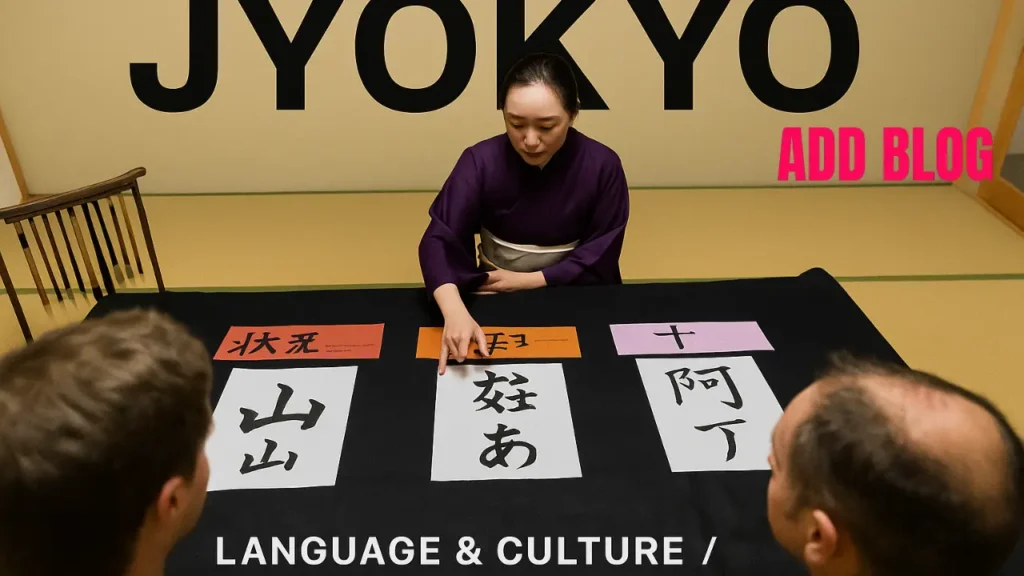

Language is one of the most powerful tools that shapes how we understand the world around us. In Japanese, there are many words that go beyond literal translation—they reflect deep cultural insight and emotional nuance. One such word is jyokyo (状況), a term that on the surface means “situation” or “circumstances,” yet its significance reaches much further. The concept of jyokyo embodies the Japanese way of perceiving life through the lens of context, relationships, and subtle awareness of the environment.
In this article, we will explore the meaning, usage, cultural significance, and applications of jyokyo in modern Japanese society. From communication and business culture to daily life and digital expression, understanding this word opens a window into the heart of Japanese thought.
The True Meaning of “Jyokyo”
The Japanese word jyokyo (状況) is composed of two kanji: 状 (jou) meaning “state” or “condition,” and 況 (kyou) meaning “situation” or “circumstances.” When combined, the term reflects not just a state of affairs but also the dynamic context surrounding it.
Unlike the English word “situation,” jyokyo implies more than an event or condition—it includes the emotional atmosphere, timing, relationships, and unspoken factors that define a moment. It is the complete picture of what is happening and why, encompassing both the seen and unseen influences.
For example, when someone says ima no jyokyo wa muzukashii (今の状況は難しい), they are not just stating “the situation is difficult.” They are expressing a complex understanding of challenges shaped by environment, timing, and social dynamics. This sensitivity to the wider picture is what makes jyokyo such a profound and flexible term.
Linguistic Roots and Kanji Breakdown
To fully appreciate jyokyo, it helps to look closely at its characters:
- 状 (jou) – Represents form, shape, or condition. It refers to the visible or describable part of a situation—the facts, the external state, the observable side of what’s going on.
- 況 (kyou) – Refers to condition or circumstance, often tied to the idea of how something changes or evolves under certain factors.
Together, they create a word that captures both the factual and emotional layers of reality. Jyokyo, therefore, is not static. It evolves. It describes a living context that requires human perception and adaptation.
Jyokyo in Everyday Japanese Conversation
In daily life, Japanese speakers use jyokyo frequently. It appears in personal discussions, workplace updates, media reports, and even government briefings. Here are a few examples that illustrate its usage:
- Genzai no jyokyo o setsumei shimasu (現在の状況を説明します) — “I will explain the current situation.”
- Kono jyokyo de wa ketsudan ga muzukashii (この状況では決断が難しい) — “It’s difficult to make a decision in this situation.”
- Jyokyo ni oujite kotae o kaeru (状況に応じて答えを変える) — “Change your response depending on the situation.”
Each expression reveals how the speaker evaluates and reacts to context. In Japanese communication, it’s not enough to speak directly; one must also read the air, understand the relationships at play, and adapt speech to fit the jyokyo.
The Cultural Philosophy Behind Jyokyo
The Japanese worldview emphasizes harmony (wa), humility, and balance. People are encouraged to act not as isolated individuals but as members of an interconnected society. In this cultural framework, awareness of jyokyo becomes essential.
Being sensitive to jyokyo means recognizing the atmosphere of a room, understanding the feelings of others, and responding in ways that maintain balance. This idea ties closely to another famous Japanese phrase: kuuki o yomu (空気を読む), which means “reading the air.” Both expressions describe the art of sensing and adjusting to circumstances without explicit instruction.
In business meetings, social gatherings, or even family life, people who can skillfully interpret jyokyo are often admired for their empathy and wisdom. They know when to speak, when to remain silent, and how to act according to the unspoken mood.
Jyokyo in Business and Professional Life
The concept of jyokyo holds great value in Japanese corporate culture. Business decisions are rarely made impulsively; instead, they are guided by careful assessment of the current situation, relationships, and timing.
For example, a company might delay a project not because it lacks resources, but because the “jyokyo” is not right—perhaps market conditions are unstable, or partner relationships are not fully aligned.
In meetings, employees often use phrases like jyokyo o mite kangaemashou (状況を見て考えましょう) — “Let’s consider it after observing the situation.” This expression embodies patience and strategic thinking. It acknowledges that outcomes depend on evolving circumstances rather than rigid plans.
Understanding jyokyo in a business context also means being aware of hierarchy, communication style, and social cues. Japanese workplaces value consensus and group harmony. Therefore, recognizing the surrounding jyokyo allows professionals to make thoughtful, context-sensitive choices that strengthen relationships and avoid conflict.
Jyokyo and Emotional Intelligence
Beyond words and workplace behavior, jyokyo reflects emotional intelligence in action. To perceive and respond to a situation with grace requires empathy, observation, and timing.
A person who understands jyokyo doesn’t simply react—they interpret. They look beneath the surface to identify hidden emotions or social signals. In doing so, they contribute to smoother interactions and more respectful communication.
In Japanese society, this awareness is often linked to maturity. Someone who cannot grasp the jyokyo may be seen as self-centered or inexperienced, while someone who naturally adapts to it earns trust and admiration.
Comparing Jyokyo with Similar Japanese Words
The Japanese language offers several terms that may seem similar to jyokyo but carry subtle differences. Understanding these distinctions is crucial for language learners and cultural observers.
- Jotai (状態) – Refers to a “state” or “condition,” often physical or static, such as the state of health or an object’s condition.
- Jitai (事態) – Describes an “event” or “situation,” often with a problematic or urgent nuance.
- Genjo (現状) – Means “the current state” or “status quo,” focusing on present conditions without much emotional context.
Jyokyo, however, encompasses both external facts and inner context. It blends these elements into one comprehensive awareness of “what is happening” and “how it feels.”
Jyokyo in Media and Modern Communication
In modern Japanese journalism, jyokyo frequently appears in news reports, weather updates, and political analysis. Phrases like genzai no jyokyo wa (“the current situation is”) begin many broadcasts or official statements.
Beyond traditional media, the word has also found its place in digital culture. Online discussions, blogs, and social media posts often use jyokyo to describe moods, group dynamics, or trending events. Young people use it to express emotional contexts—saying “this jyokyo is awkward” or “funny jyokyo”merging humor and empathy.
The flexibility of jyokyo has allowed it to remain relevant in the digital era, adapting to both formal and casual communication styles.
How Foreigners Can Learn from the Concept of Jyokyo
For those studying Japanese or working in Japan, understanding jyokyo can be transformative. It teaches that communication is not just about language proficiency but about emotional sensitivity.
To navigate interactions smoothly, one must observe surroundings, listen carefully, and interpret unspoken cues. This approach encourages respect for others’ feelings and circumstances, which lies at the heart of Japanese etiquette.
In multicultural workplaces or friendships, adopting a “jyokyo mindset” can enhance collaboration. It reminds us to adapt our tone, timing, and expectations based on the situation rather than fixed assumptions.
Jyokyo in Creative and Philosophical Thought
Writers, artists, and thinkers in Japan often draw inspiration from the fluidity of jyokyo. It represents the transient nature of life—ever-changing, never static. In literature and cinema, the term sometimes captures the quiet tension or beauty of a moment when emotions and surroundings merge.
Philosophically, jyokyo aligns with the idea that everything is interconnected. Every decision, emotion, or movement exists within a larger framework of conditions. By recognizing this, people cultivate awareness and mindfulness in their actions.
In creative expression, this perspective encourages subtlety and depth. A poem, for instance, might not describe events directly but instead evoke the jyokyo that surrounds them—the mood, tone, and emotional climate of the scene.
Why “Jyokyo” Still Matters Today
In a fast-paced, globalized world, many cultures focus on individual achievement and clear expression. However, the idea of jyokyo reminds us that success and understanding often depend on context. Knowing when and how to act can be just as important as what you do.
In modern workplaces, social networks, and cross-cultural interactions, awareness of jyokyo fosters empathy and harmony. It encourages people to look beyond words, to sense emotions and environmental signals, and to adapt gracefully to change.
Learning this concept not only enriches our understanding of Japanese culture but also deepens our own interpersonal awareness. Whether in conversation, negotiation, or creative work, sensitivity to jyokyo helps build stronger, more meaningful human connections.
Conclusion
The word jyokyo is far more than a linguistic term—it is a cultural philosophy that bridges perception, communication, and emotion. It embodies the Japanese talent for recognizing subtlety and context in every interaction.
By understanding jyokyo, we gain insight into how people in Japan interpret the world—not through isolated facts, but through the relationships and atmospheres that shape meaning. In every conversation, meeting, or decision, the awareness of jyokyo reminds us that life is not fixed; it is fluid, relational, and deeply human.
Frequently Asked Questions (FAQs)
1. What does jyokyo mean in Japanese?
Jyokyo (状況) means “situation” or “circumstances,” but it also refers to the broader context or environment that defines how events unfold.
2. How is jyokyo different from jotai or jitai?
While jotai refers to a static state and jitai often implies an urgent or problematic event, jyokyo captures both the factual and emotional dimensions of a situation.
3. Why is jyokyo important in Japanese culture?
It reflects the Japanese value of harmony and awareness of context. Understanding jyokyo helps maintain smooth relationships and avoid misunderstandings.
4. Can jyokyo be used in business communication?
Yes. In professional settings, people often refer to jyokyo to describe market conditions, company performance, or meeting atmospheres.
5. How can foreigners apply the idea of jyokyo in daily life?
By observing context, listening deeply, and adjusting actions to fit the situation. Recognizing jyokyo helps improve empathy and cultural understanding in any environment.
Read More: How DoctorHub360.com Neurological Diseases Are Transforming Modern Brain and Nerve Care