
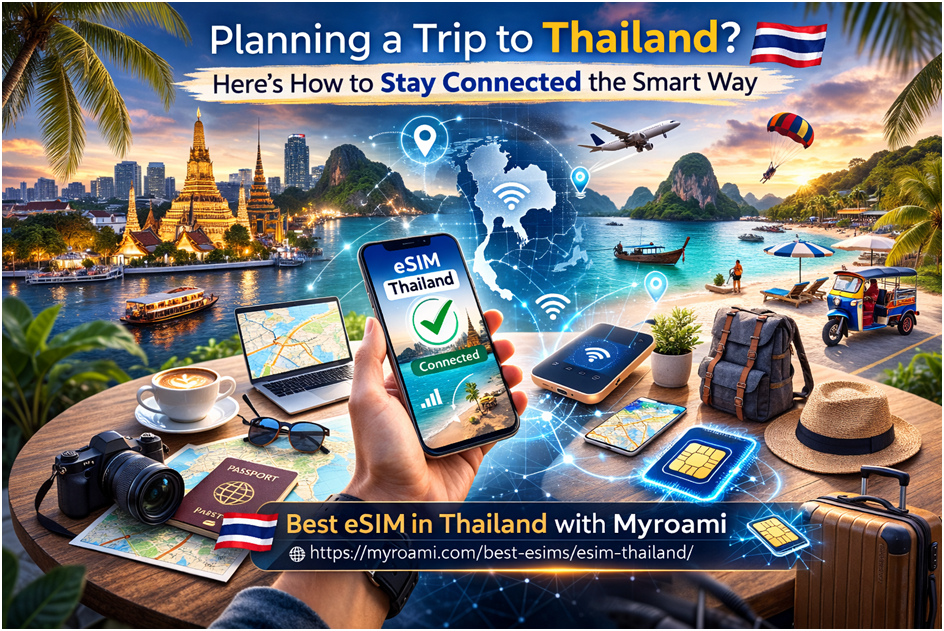

Thailand remains one of the most popular long-haul destinations for American travelers. Whether it’s the vibrant street life of Bangkok, the beaches of Phuket, the cultural landmarks of Chiang Mai, or island hopping in Krabi, the country offers a mix of adventure, affordability, and rich heritage that continues to attract visitors year after year.
While most travelers carefully plan flights, accommodations, and excursions, one important detail often gets overlooked: mobile connectivity. In today’s digital-first travel environment, having reliable internet access abroad is not just a convenience—it’s essential.
The Connectivity Challenge Abroad
Travelers heading to Thailand from the United States quickly discover that staying connected isn’t always straightforward. Unlike travel within Europe, where roaming agreements simplify mobile usage, Thailand falls outside of most standard U.S. roaming inclusions.
International roaming packages offered by American carriers can be expensive and may come with strict data caps. Exceeding those limits can result in additional charges. Even when a roaming plan is purchased, performance and speeds may vary depending on network agreements and location.
Public WiFi is widely available in hotels, cafés, and airports, but connections can be inconsistent and are not always secure for sensitive activities like online banking, business communication, or uploading important documents.
Another option is purchasing a local SIM card upon arrival. While often affordable, this requires time at the airport, passport registration, and physically swapping out your current SIM card—something many travelers prefer to avoid.
With modern travel increasingly dependent on apps for navigation, ride-hailing, restaurant reservations, translations, and airline updates, unreliable connectivity can quickly disrupt an otherwise smooth trip.
What Is an eSIM and Why It’s Gaining Popularity
An eSIM (embedded SIM) is a digital alternative to the traditional plastic SIM card. Instead of inserting a physical chip into your phone, you download a mobile data plan directly onto your device. Most newer smartphones sold in the U.S., including recent iPhone, Samsung Galaxy, and Google Pixel models, support eSIM functionality.
The appeal is clear:
- No physical SIM swap required
- Activation before departure
- Immediate connectivity upon landing
- Ability to keep your primary U.S. number active
- Transparent, prepaid data plans
For travelers, this means less time dealing with logistics and more time enjoying the destination.
Comparing eSIM Options Before You Fly
As awareness of eSIM technology grows, more travelers are researching their options before departure rather than relying on last-minute solutions at the airport.
Instead of committing to expensive roaming plans or guessing which local SIM might work best, many now compare digital data plans online. Platforms that allow travelers to evaluate coverage, pricing, and data allowances make the process significantly easier.
For those preparing a trip, tools that help identify the best eSIM in Thailand with Myroami allows travelers to review available providers and select a plan that matches the length and type of their stay.
This proactive approach reduces uncertainty and helps avoid unexpected charges.
Who Benefits Most from eSIM Solutions?
While nearly any international traveler can benefit from an eSIM, certain groups find them particularly useful:
Vacationers exploring multiple cities benefit from seamless data access while navigating unfamiliar areas.
Families traveling together can better manage connectivity costs without relying on unpredictable roaming charges.
Remote workers and digital nomads require stable data for video calls, cloud access, and ongoing communication.
Students participating in exchange programs depend on mobile internet for both academic and social coordination.
Frequent travelers appreciate the flexibility of activating different plans without changing physical SIM cards each time.
In each case, having a reliable data solution in place before departure adds convenience and predictability.
Smart Travel Means Digital Preparation
Modern travel planning goes beyond booking flights and packing luggage. Digital readiness is increasingly part of the preparation process.
Before choosing an eSIM, travelers should:
- Confirm their device supports eSIM functionality
- Review data needs based on expected usage
- Compare plan durations and coverage
- Activate the plan shortly before departure
Taking these steps ensures immediate connectivity upon arrival in Thailand, reducing stress during airport transfers or hotel check-ins.
Connectivity Is Now Part of the Travel Experience
In 2025, travel is deeply intertwined with digital infrastructure. From booking last-minute tours to translating menus or navigating unfamiliar streets, internet access shapes the overall experience.
By planning connectivity ahead of time, travelers can avoid costly surprises and minimize disruptions. Whether visiting Thailand for relaxation, adventure, or remote work, having reliable mobile data from the moment you land makes a noticeable difference.
Smart travel today isn’t just about choosing the right destination—it’s about preparing digitally. And for those heading to Thailand, comparing eSIM options before departure is one small step that can significantly improve the journey.