
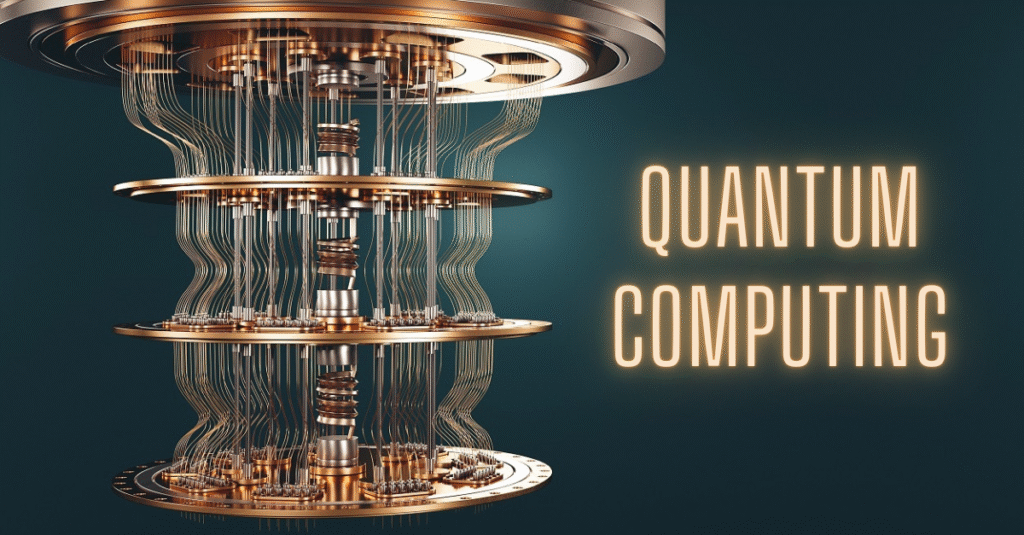

Quantum computing represents one of the most transformative technological advancements of the 21st century, promising to revolutionize how we solve problems that are currently intractable for classical computers. Unlike traditional computers, which rely on bits to represent information as either 0 or 1, quantum computers leverage the principles of quantum mechanics, utilizing qubits that can exist in multiple states simultaneously. This fundamental difference allows quantum computers to process vast amounts of information in parallel, potentially solving complex problems in fields such as cryptography, material science, artificial intelligence, and optimization far more efficiently than classical machines.
Principles of Quantum Mechanics in Computing
The concept of quantum computing is rooted in the principles of quantum mechanics, a branch of physics that studies the behavior of particles at the smallest scales. Central to quantum computing are phenomena such as superposition, entanglement, and quantum interference. Superposition allows a qubit to exist in a combination of 0 and 1 simultaneously, exponentially increasing computational power as more qubits are added. Entanglement creates a deep connection between qubits, so that the state of one qubit instantly affects the state of another, regardless of distance. Quantum interference manipulates probabilities to amplify correct solutions while canceling out incorrect ones, providing the computational advantage over classical methods.
Applications of Quantum Computing
Quantum computers hold significant promise for solving problems beyond the reach of classical computing. One notable application is cryptography. Classical encryption methods, such as RSA, rely on the difficulty of factoring large numbers—a task that would take classical computers an impractically long time to solve. Quantum computers, using algorithms like Shor’s algorithm, could factor these numbers efficiently, potentially rendering many traditional encryption schemes obsolete. This necessitates the development of quantum-resistant cryptography to protect sensitive data in the future.
In drug discovery and material science, classical simulations of molecular interactions are limited by the exponential complexity of quantum systems. Quantum computers can model these interactions more naturally, potentially accelerating the discovery of new drugs, optimizing chemical reactions, and enabling the development of materials with tailored properties. Simulating the behavior of proteins or complex catalysts at a quantum level could lead to breakthroughs in medicine and sustainable energy technologies.
Artificial intelligence (AI) and machine learning also benefit from quantum computing. Many machine learning algorithms involve searching large datasets, optimizing functions, or sampling from complex distributions. Quantum computers can provide speedups in these tasks through algorithms such as the quantum approximate optimization algorithm and quantum-enhanced machine learning techniques, leading to more efficient pattern recognition, improved natural language processing, and more accurate predictive models.
Challenges in Quantum Computing
Despite the enormous potential, building practical quantum computers remains a massive scientific and engineering challenge. Qubits are extremely delicate, and maintaining their quantum state requires sophisticated techniques to mitigate errors caused by decoherence and noise. Various physical implementations of qubits exist, including superconducting circuits, trapped ions, topological qubits, and photonic systems, each with advantages and technical hurdles.
Error correction is another critical hurdle. Quantum systems are inherently prone to errors due to environmental interactions, making fault-tolerant computation essential. Quantum error correction schemes, such as the surface code, involve encoding logical qubits into multiple physical qubits to detect and correct errors without directly measuring the qubits, preserving quantum information. Achieving scalable fault-tolerant quantum computing requires a significant number of physical qubits for each logical qubit.
Quantum Software and Algorithms
Software development for quantum computing is still in its infancy. Programming a quantum computer requires knowledge of quantum algorithms and linear algebra. Current programming frameworks such as Qiskit, Cirq, and Ocean are designed to bridge classical computing knowledge with quantum principles. Researchers are actively developing new algorithms to exploit quantum advantages, while hybrid quantum-classical approaches are being explored to utilize near-term quantum devices effectively. Noisy intermediate-scale quantum (NISQ) devices, though not fully fault-tolerant, offer opportunities for experimenting with quantum algorithms on practical problems in chemistry, optimization, and machine learning.
Achievements and Milestones
The race to achieve quantum supremacy—the point at which a quantum computer can perform a task beyond classical capabilities—has garnered significant attention. Google’s 2019 announcement that its Sycamore processor performed a specific computation faster than the most powerful classical supercomputer demonstrated the potential of quantum computing. While current quantum devices are specialized and not yet broadly outperforming classical computers, the development of versatile and error-tolerant quantum systems remains a primary goal.
Ethical, Economic, and Societal Considerations
Quantum computing raises ethical, economic, and societal considerations. Its potential to disrupt cybersecurity infrastructure requires proactive planning for data protection. Economically, quantum computing could reshape industries like pharmaceuticals, finance, logistics, and energy by introducing new efficiencies and capabilities. Additionally, quantum technology carries strategic global importance, prompting nations to invest heavily in research and development. Collaboration among academia, industry, and government is essential to ensure safe, ethical, and equitable development.
The Future of Quantum Computing
Looking ahead, quantum computing promises vast opportunities alongside significant challenges. Advances in qubit technology, error correction, and algorithm design will determine the speed of progress. Interdisciplinary research combining physics, computer science, engineering, and materials science continues to drive innovation. Integration of quantum computing with classical computing and AI may create hybrid systems capable of solving previously unimaginable problems. As understanding of quantum systems deepens, new applications are likely to emerge in areas like global supply chain optimization, climate modeling, and space exploration.
Conclusion
Quantum computing stands poised to redefine the boundaries of computational capability. Its foundation in quantum mechanics offers a paradigm shift beyond classical computing limitations, opening new horizons in cryptography, drug discovery, materials science, AI, and more. While challenges remain in qubit stability, error correction, and scalable hardware, the rapid pace of research and investment suggests practical quantum computing is approaching reality. The potential impact on society, industry, and science is immense, signaling a new era in computation, where once-unsolvable problems may finally yield to the power of quantum mechanics.