
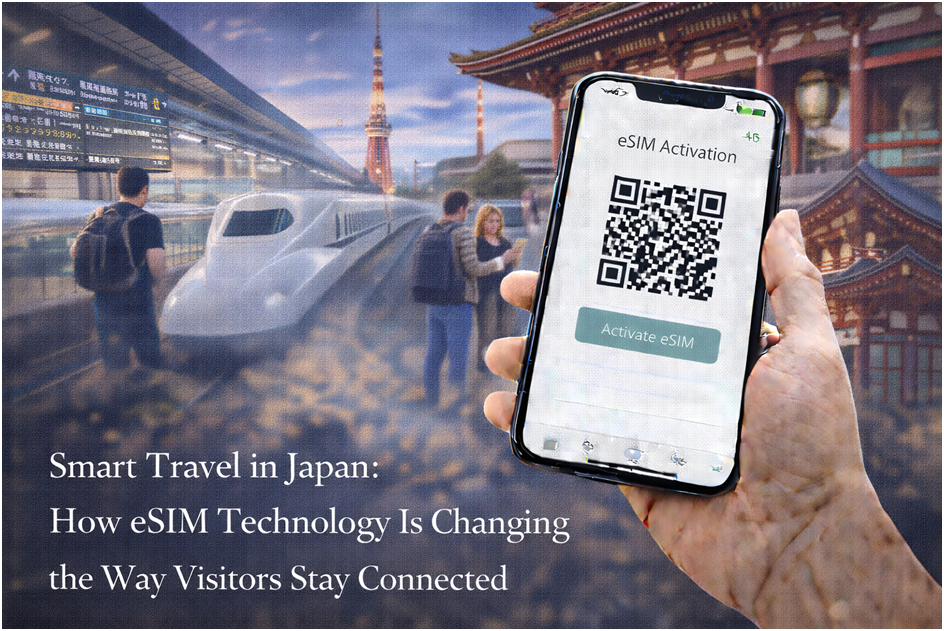

Japan has long fascinated American travelers. From Tokyo’s neon skyline to Kyoto’s centuries-old temples, the country offers a striking contrast between cutting-edge innovation and deep-rooted tradition. But while Japan is known for its efficiency and technological sophistication, navigating it as a foreign visitor can still present unique challenges. In this environment, digital connectivity has become one of the most important tools for modern travel.
Planning a trip to Japan today means thinking beyond flights and hotels. It also means considering how you’ll stay connected once you land.
Why Japan Requires Smart Travel Planning
Japan is exceptionally organized, but it is also highly structured. Train systems operate with remarkable precision, social etiquette is nuanced, and many services still function primarily in Japanese. While major tourist areas provide English signage, this becomes less common in smaller cities and residential neighborhoods.
Visitors quickly realize that having access to real-time information makes a significant difference. Whether navigating Tokyo’s vast rail network, locating a restaurant tucked away in a side street, or confirming a booking, connectivity transforms uncertainty into confidence.
Japan rewards preparation—but it also rewards flexibility. Being able to adapt your plans in real time is part of experiencing the country fully.
The Rise of eSIM Technology
Traditional international travel often involved either paying expensive roaming fees or purchasing a local SIM card after arrival. Both options can create friction. Roaming charges add up quickly, and finding a local SIM provider requires time, paperwork, and sometimes language navigation.
eSIM (embedded SIM) technology offers a different approach. Instead of inserting a physical card, travelers download a digital data profile directly to their device. Activation typically happens before departure or immediately upon arrival.
The result is simpler, faster, and more aligned with how modern smartphones operate. There is no need to swap hardware or search for kiosks at the airport. Connectivity becomes part of the pre-trip preparation, rather than a task to handle after landing.
Why Connectivity Matters More in Japan
In many destinations, being offline is inconvenient. In Japan, it can be limiting.
The country’s public transportation system, while outstanding, can feel overwhelming at first. Tokyo alone has multiple rail operators, interconnected subway lines, and detailed station layouts. Digital maps and transit apps help travelers move efficiently and avoid confusion.
Translation tools are equally important. While many younger Japanese speak some English, everyday interactions—ordering food, reading instructions, understanding signage—often require assistance from mobile apps.
Beyond navigation and translation, connectivity supports:
- Digital ticketing for museums and attractions
- Access to QR-code-based menus
- Online restaurant reservations
- Ride-hailing services
- Weather and emergency updates
In a country prone to seasonal typhoons or seismic activity, access to official alerts and updates adds an additional layer of reassurance.
eSIM as a Practical Travel Solution
Because Japan combines high digital integration with language complexity, reliable data access becomes particularly valuable. eSIM technology addresses this need by removing traditional barriers to mobile connectivity.
Travelers can set up their data plan before departure, land in Japan, and immediately access maps, messaging, and booking platforms. There’s no downtime between arrival and connection.
In this context, options like Holafly’s esim in Japan offer a straightforward way for visitors to stay connected throughout their trip without relying on public Wi-Fi or navigating unfamiliar telecom providers. Instead of worrying about technical logistics, travelers can focus on exploring.
This shift reflects a broader change in travel expectations: connectivity is no longer an add-on—it’s infrastructure.
Who Benefits Most from eSIM Connectivity?
While almost any traveler can benefit from digital access in Japan, certain groups find it especially valuable.
First-time visitors gain confidence navigating complex train systems and local customs.
Solo travelers rely on connectivity for safety, navigation, and communication.
Business travelers need consistent access to email, video calls, and scheduling tools.
Students and exchange participants depend on mobile data for academic resources and local coordination.
Digital nomads require reliable, uninterrupted connectivity to balance work and exploration.
For each of these groups, staying connected is not about constant screen time—it’s about having support available when needed.
Technology Supporting Cultural Immersion
Some travelers worry that staying connected detracts from authentic experiences. In reality, digital tools often enhance immersion. Translation apps enable deeper conversations. Cultural guides provide context for historical landmarks. Navigation tools make it easier to venture beyond tourist districts.
Rather than isolating visitors, connectivity allows them to engage more thoughtfully with their surroundings.
Japan itself exemplifies this balance. Ancient shrines coexist with robotics labs. Traditional tea ceremonies happen steps away from high-speed rail stations. Technology does not replace tradition—it operates alongside it.
For foreign visitors, eSIM technology plays a similar role. It doesn’t change the essence of travel, but it reduces friction and opens doors.
The Future of Travel Connectivity
As more devices become eSIM-compatible and global mobility increases, digital-first connectivity solutions are likely to become standard. Airports, airlines, and tourism infrastructure increasingly assume travelers will have constant access to mobile data.
In Japan—where systems are precise and expectations are clear—having reliable connectivity is becoming part of responsible travel planning. It allows visitors to follow local guidelines, adapt to changing conditions, and move confidently between cities and regions.
Smart travel today is not just about where you go. It’s about how prepared you are to navigate your destination.
Travel Made Simpler Through Technology
Japan offers one of the most rewarding travel experiences in the world, but it also requires awareness, adaptability, and preparation. As international tourism grows and digital tools continue to evolve, eSIM technology represents a practical step toward smoother, more informed travel.
By simplifying connectivity, modern solutions help travelers spend less time solving logistical challenges and more time experiencing Japan’s culture, landscapes, and everyday life.
In an increasingly connected world, smart travel begins before you board the plane—and reliable digital access is part of that preparation.