
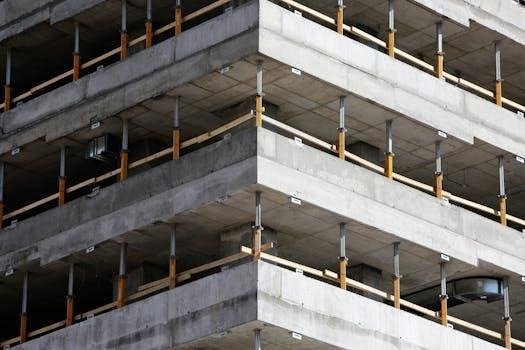

Public sector buildings rarely get applause. It should. These projects carry daily life on their shoulders, from schools that swallow noise to stations that swallow crowds. Precast concrete fits this world because it behaves. It turns uncertainty into a timetable and a timetable into a budget that doesn’t melt in committee. The trick is to stop treating precast as plain grey Lego. It can do speed, yes. It can also do beauty, resilience, repair, and even politics, the kind measured in public trust. That is the real brief, and it matters daily.
Civic Kit-of-Parts, Not Cookie-Cutter
Standardisation may sound boring, but it saves a program time and money. Create a set of wall panels, stair flights, landings, parapets, and service zones that can be used repeatedly. Then mix them together like a busy city orchestra. Some teams even put the kit up for sale, ask for bids, and keep the competition going without having to redraw everything. Suppliers such as JP Concrete (jpconcrete.co.uk) can slot into that logic. The real innovation sits in governance. Set dimensional rules, performance targets, and connection details once. Every new library, clinic, or depot gets faster delivery, fewer site surprises, cleaner procurement arguments, and calmer neighbours.
Build for Disassembly, Because Assets Age
Public assets don’t vanish when fashions change. They limp on, patched, re-patched, and politically defended. Precast can stop the limping. Specify dry connections, accessible bolts, and clear lifting points so future teams can move bays, swap facade panels, or extend platforms without demolition theatre. That turns a building into an inventory, not rubble. This approach also changes carbon maths in a way that accountants can grasp. Reuse beats recycling. The clever part lies in early coordination. Services, tolerances, and fire stopping must suit later separation, not just day-one commissioning.
Hybrid Stations and Bridges with Embedded Tech
Transport schemes love concrete and hate disruption. Precast lets both sides win when engineers treat segments as smart carriers. Cast in conduits, sensor pockets, anchor rails, and inspection channels. Then add real monitoring, not decorative gadgets. Strain and vibration data can feed maintenance schedules, reduce closures, and catch problems before the tabloids do. Pair precast beams or deck panels with steel where spans demand it, timber where interiors want warmth, and keep joints readable for inspectors. A bridge that explains itself tends to last.
Climate-Proof Streetscapes and Flood Works
Councils now build for weather that doesn’t behave. Precast can quickly shape flood walls, culverts, attenuation tanks, and raised public realms, with finishes that won’t crumble after two winters of grit and salt. Use textured panels to cut graffiti appeal and improve slip resistance. Create modular river edges that accept future height increases, because rainfall charts keep changing. Add precast planters and tree pits with root paths and irrigation voids, then connect them to the drainage system. That provides streets with both shade and storage. Resilience can look civilised, not bunker-like.
Conclusion
Innovation in precast concrete doesn’t come in fancy shapes alone. It comes from treating public works as repeatable systems, repairable assets, and climate infrastructure, all while keeping citizens moving. The strongest projects speak in two languages at once. They communicate engineering concepts to contractors and provide clarity to the public. Precast helps because it provides certainty in advance. Less noise on site. Fewer lorry movements. Tighter programmes. Better finishes should be used in areas where people come into contact with the building. Add excellent detailing and honest maintenance plans, and the gains compound for decades. A council that builds this way looks competent, and competence remains the rarest civic luxury.
Image attributed to Pexels.com