
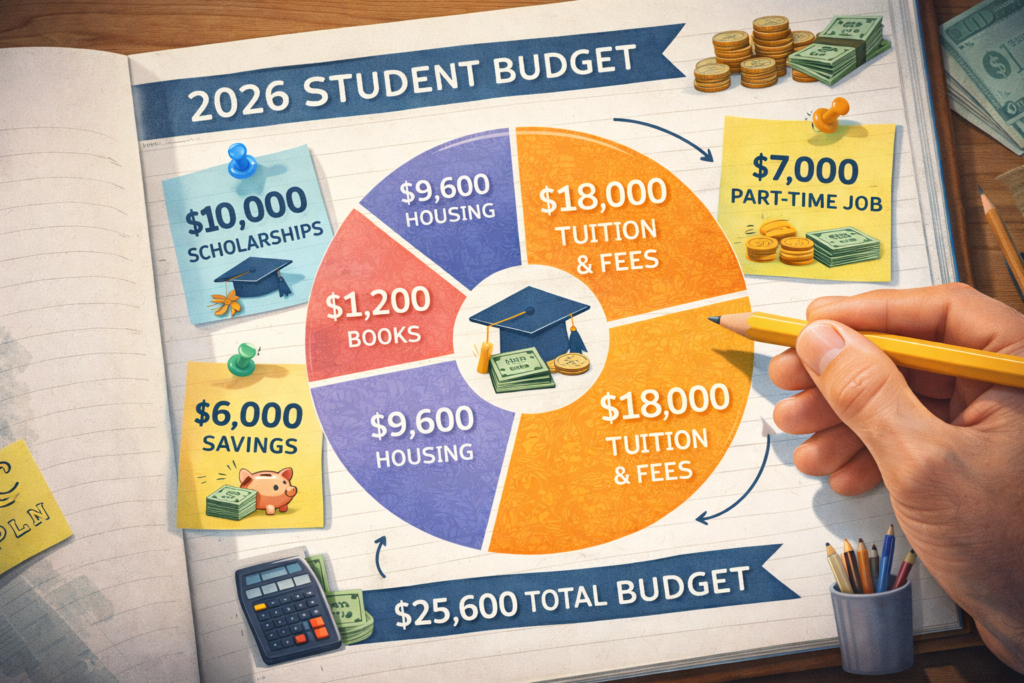

Every January, millions of students, working professionals, and parents sit down with the same optimistic spreadsheet: career goals on one side, bank balance on the other. By February, the math rarely looks as clean. The cost of education — formal degrees, professional certifications, continuing education credits — has climbed steadily, and 2026 is no different. What has changed, however, is the availability of high-quality free resources that can dramatically shift that equation in your favor.
The smartest move you can make this year isn’t choosing the cheapest course — it’s understanding where your money is actually going and building a strategy around that knowledge.
The Hidden Costs of Certification Nobody Talks About
When people budget for a professional certification, they typically account for the course fee and maybe a textbook. What they consistently underestimate — or ignore entirely — are the downstream costs that come when preparation falls short.
Consider the true cost breakdown of a mid-level IT or project management certification in 2026:
Initial exam registration fee: $200 – $450 depending on the certification body
Study guide or prep course: $50 – $300
Retake fee (if you fail): Often 60 – 80% of the original exam cost
Lost time: Days or weeks of study you have to repeat from scratch
A single failed exam attempt doesn’t just sting emotionally — it can cost you another $200 to $350 out of pocket. For someone balancing a job, family, and education, that’s a significant hit. And yet, it’s almost entirely preventable.
Inflation Has Changed the Rules of Smart Education Spending
The broader economic picture matters here. Persistent inflation over the past few years has made professional development more expensive across the board — from conference attendance to online course subscriptions. Families are seeking ways to protect their educational investments while maintaining high standards.
As inflation drives up the cost of professional development, savvy learners are cutting expenses without sacrificing quality. Protect your budget by avoiding expensive retake fees. We recommend reaching an 85% score on simulation exams before you schedule your official proctored test. By using a free Practice Test, you can build the confidence and knowledge needed to keep your career goals on track financially.
The 85% Rule: A Benchmark Worth Following
Exam coaches and instructional designers recommended a specific readiness threshold before scheduling high-stakes tests. Consistently scoring 85% or higher on full-length simulations provides both a statistical advantage and a psychological edge.
This benchmark is far from arbitrary. Real exams introduce time pressure and unfamiliar phrasing that can lower your performance. A buffer of preparedness—proven through consistent practice scores—absorbs that uncertainty. Students who maintain this 85% mark pass at significantly higher rates, ensuring they only pay for the exam once.
Building a Free-First Study Strategy for 2026
A free-first approach doesn’t mean free-only. It means being deliberate about which parts of your preparation genuinely require paid resources and which can be covered effectively at no cost. For most learners, the answer is: far more than you think.
Public libraries give access to certification study guides, databases like Coursera audit options provide free content, and YouTube channels maintained by certified professionals cover complex topics in digestible formats. Layering free practice simulations on top of that content gives you a complete prep system — one that costs nothing beyond your time.
The key is consistency. A 20-minute daily practice session over six weeks beats a weekend cram session every time. The brain retains information through spaced repetition, and free tools can absolutely support that approach if you use them with intention.
Your 2026 Education Budget Deserves a Smarter Start
Investing in yourself is one of the soundest financial decisions you can make. But investing wisely means showing up prepared, understanding exactly where your money is going, and taking every legitimate opportunity to reduce unnecessary spending.
The students and professionals who will look back at 2026 as a turning point in their careers won’t be the ones who spent the most on courses. They’ll be the ones who were strategic — who used every free resource available, who built genuine competence before spending a dollar on exam fees, and who passed their certifications the first time.
Start your prep with free tools. Benchmark at 85%. Then — and only then — book your seat.