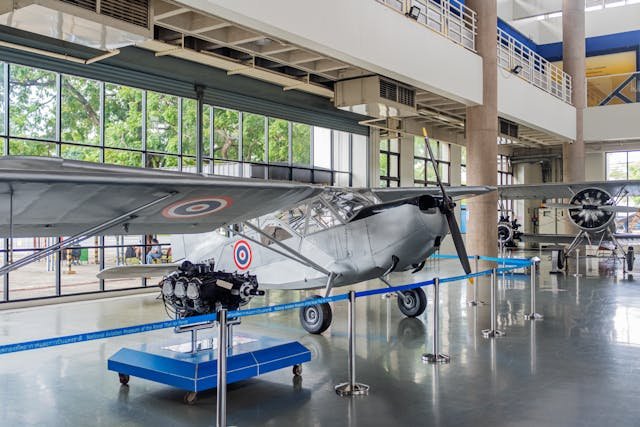

The aviation industry has always stood at the cutting edge of technological innovation, constantly pushing what’s possible in human transportation and exploration. Think about it, from the Wright brothers’ first powered flight to the incredibly sophisticated aircraft systems we see today, technology has driven every major leap forward in aviation. What makes this relationship so fascinating is how symbiotic it really is. Each breakthrough in technology unlocks new capabilities for aviation, while the industry’s demanding requirements push technologists to create innovations that often end up being useful far beyond the runway.
Digital Navigation and Flight Management Systems
Modern aircraft depend on sophisticated digital navigation systems that have completely revolutionized how pilots handle their flights. Remember when pilots relied solely on visual landmarks and basic instruments? Those days are long gone. Today’s flight management systems weave together GPS technology, inertial navigation systems, and real, time weather data to deliver accuracy and safety that would’ve seemed like science fiction just a few decades ago. These systems are constantly at work, calculating optimal flight paths, tracking fuel consumption, and updating arrival times, all while adjusting to changing conditions in milliseconds.
What’s even more impressive is how artificial intelligence and machine learning have taken these capabilities to another level. Aircraft can now predict turbulence before you feel that first bump, optimize routes to save fuel, and assist in complex decision-making when flights get complicated. The computational power running all this? It would’ve been completely unimaginable just a generation ago, yet it’s now standard equipment whether you’re flying commercial or private. That’s how far we’ve come.
Advanced Materials and Manufacturing Technologies
The evolution of materials has transformed aircraft design in ways that genuinely matter for performance and efficiency. Composite materials, particularly carbon fiber reinforced polymers, have steadily replaced traditional aluminum across many aircraft components. The result? Significant weight reductions without sacrificing (and often improving) structural strength. These advanced materials come together through cutting-edge processes: automated fiber placement, 3D printing, and precision machining orchestrated by sophisticated computer systems.
Take the Boeing 787 Dreamliner as a real-world example. About fifty percent of its weight comes from composite materials, which directly translates to better fuel efficiency and more comfortable flights for passengers. Additive manufacturing technologies are creating engine components that were literally impossible to produce before, featuring internal cooling channels and optimized geometries that boost performance. The ongoing partnership between material science and manufacturing technology keeps unlocking new possibilities, enabling engineers to design structures that are simultaneously lighter, stronger, and more durable than anything we’ve seen before.
Connectivity and In-Flight Communication Systems
Our expectation for constant connectivity hasn’t stopped at airport gates, it’s followed us into the skies, fundamentally changing both how we experience flights and how airlines operate. Modern aircraft come equipped with satellite communication systems providing internet access, live television, and real-time data transmission, even at cruising altitude. Passengers can work productively, stream their favorite shows, and stay in touch with people on the ground throughout their entire journey.
For airlines and operators, this connectivity delivers something even more valuable: real-time monitoring of aircraft systems, predictive maintenance scheduling, and instant communication between flight crews and ground operations. The technology making all this happen involves complex antenna arrays, signal processing algorithms, and high-throughput satellites specifically engineered for aeronautical applications. Enhanced connectivity also supports critical safety functions, allowing aircraft to continuously transmit position, speed, and system status, information that’s invaluable for air traffic management and emergency response when every second counts.
Illumination Technology and Safety Enhancements
The evolution of lighting systems in aviation shows how technological progress directly enhances safety and operational efficiency. Traditional incandescent bulbs have been steadily replaced by solid-state lighting solutions that offer superior reliability, longer lifespans, and better energy efficiency. These modern systems consume less power, generate minimal heat, and require far less maintenance than their predecessors, which matters when you’re maintaining a fleet of aircraft.
This technological shift extends across navigation lights, landing lights, cabin lighting, and instrument panel illumination, with each application benefiting from the improvements. During night operations or when navigating through low-visibility conditions, pilots count on aircraft LED lights to ensure maximum visibility and safety during the most critical flight phases. Today’s programmable lighting systems can dynamically adjust cabin ambiance to help reduce jet lag effects and enhance passenger comfort throughout different stages of the flight. The durability of contemporary lighting solutions becomes especially crucial when you consider the harsh conditions aircraft face, extreme temperature swings, constant vibration, and pressure changes that would quickly destroy lesser technology. This represents just one example of how incremental improvements across multiple systems collectively enhance aviation safety and efficiency.
Automation and Autonomous Flight Systems
Automation has gradually taken on more responsibility for aircraft operations, with autopilot systems now capable of managing everything from takeoff to landing when conditions are right. These systems pull together data from hundreds of sensors distributed throughout the aircraft, continuously making adjustments to maintain stable flight, optimal speed, and efficient fuel consumption. The technology powering these autopilot systems includes sophisticated control algorithms, redundant computing systems, and fail-safe mechanisms designed to keep things safe even when individual components fail.
Recent developments in autonomous flight technology are pushing these boundaries even further. Experimental aircraft are demonstrating fully autonomous operations, obstacle avoidance, emergency landing procedures, adaptive flight planning, the whole nine yards. While regulatory requirements and safety considerations ensure that human pilots remain essential for commercial aviation (and rightfully so), the technology keeps advancing at a remarkable pace. Interestingly, the knowledge gained from aviation automation has influenced autonomous vehicle development in other transportation sectors, showing how innovations in one field can spark progress across multiple industries.
Cybersecurity in Aviation Technology
As aircraft become more connected and dependent on digital systems, cybersecurity has emerged as one of the aviation industry’s most critical concerns. Modern aircraft contain millions of lines of software code controlling everything from flight management to passenger entertainment systems, creating potential vulnerabilities that demand serious attention. The industry has responded by implementing robust security protocols, encrypted communications, isolated network architectures, and continuous monitoring systems that detect suspicious activity before it becomes a problem.
Regulatory bodies worldwide now mandate specific cybersecurity standards for aircraft systems, recognizing that digital threats pose genuine risks to aviation safety. The real challenge? Balancing the benefits of connectivity with stringent security requirements, making sure systems stay protected without compromising functionality or ease of use. Aviation cybersecurity specialists work around the clock to identify potential vulnerabilities, develop countermeasures, and educate everyone involved about best practices. This ongoing effort requires close collaboration between aircraft manufacturers, airlines, technology providers, and government agencies to maintain the integrity of aviation systems in our increasingly digital world.
Conclusion
The intertwining of technology and aviation represents one of the most dynamic partnerships in modern industry, driving relentless improvement in safety, efficiency, and capability. As emerging technologies like artificial intelligence, quantum computing, and advanced materials continue maturing, their impact on aviation will only deepen and expand in ways we’re just beginning to understand. The future promises aircraft that are more autonomous, more efficient, and more connected than we can currently imagine, all built on foundations laid by decades of technological innovation. This relationship between tech and aviation serves as a powerful model for how different fields can collaborate and inspire each other, ultimately benefiting society through safer, more accessible air travel.