
Writing a dissertation is arguably the most significant milestone in a student’s academic life. It is the transition point from being a consumer of knowledge to becoming a producer of it. As we move through 2026, the expectations for academic research have shifted. Universities are no longer looking for mere “book reports” on a grand scale; they are looking for original thought, digital literacy, and a structure that flows with logical precision. A first-class dissertation is essentially a high-level argument that is supported by evidence and organized in a way that makes it impossible for the reader to disagree with your conclusions.
The pressure of this task is why so many students find themselves staring at a blank screen for weeks. Balancing the research phase with writing can feel like a secondary full-time job. Many students in this position find that seeking professional Dissertation Help from experts like myassignmenthelp can provide the structural blueprint they need to get started. Having a professional perspective on your outline can save you dozens of hours of rewriting later in the process, ensuring that your core argument is sound before you even type the first word of your introduction.
1. The Pre-Writing Phase: Conceptualization and Planning
Before you even think about the structure, you must have a “Research Question” that is narrow enough to be manageable but deep enough to allow for analysis. A common mistake is choosing a topic that is too broad, like “Climate Change in Europe.” A first-class student would narrow this to “The Impact of Rising Sea Levels on Urban Planning in Coastal Netherlands: 2020–2025.”
Once the question is set, the structure follows a traditional but rigid format. In 2026, examiners are looking for “The Golden Thread.” This is a concept where every single chapter, from the introduction to the conclusion, refers back to that central research question. If a paragraph doesn’t help answer that question, it shouldn’t be in your dissertation.
2. The Abstract: Your Research in a Nutshell
The abstract is often the last thing you write, but it is the first thing your marker reads. It is a 250-to-300-word summary of the entire project. It should state the problem you are solving, the methodology you used, the key results you found, and the final conclusion. In a digital-first academic world, the abstract is also what helps search engines index your work. Think of it as a professional “elevator pitch” that proves you understand your own work well enough to summarize it concisely.
3. The Introduction: Setting the Hook
Your introduction sets the stage. It needs to provide a background of the topic, justify why the study is important right now (the “rationale”), and clearly state the aims and objectives. A “First-Class” introduction doesn’t just describe the topic; it creates a sense of urgency. Why does the world need to know the answer to your research question today?
You should also include a “Roadmap” at the end of the introduction. This is a short paragraph that tells the reader exactly what to expect in the following chapters. For example: “Chapter 2 reviews the existing literature, while Chapter 3 outlines the qualitative methodology used in this study.” This clarity is what markers look for when they are grading for “organization and flow.”
4. The Literature Review: Synthesizing, Not Listing
This is where most students lose their way. A standard dissertation lists what Author A said and then what Author B said. A First-Class dissertation synthesizes them. This means you look for themes, contradictions, and gaps. You are looking for the “silence” in the current research where your voice can be heard.
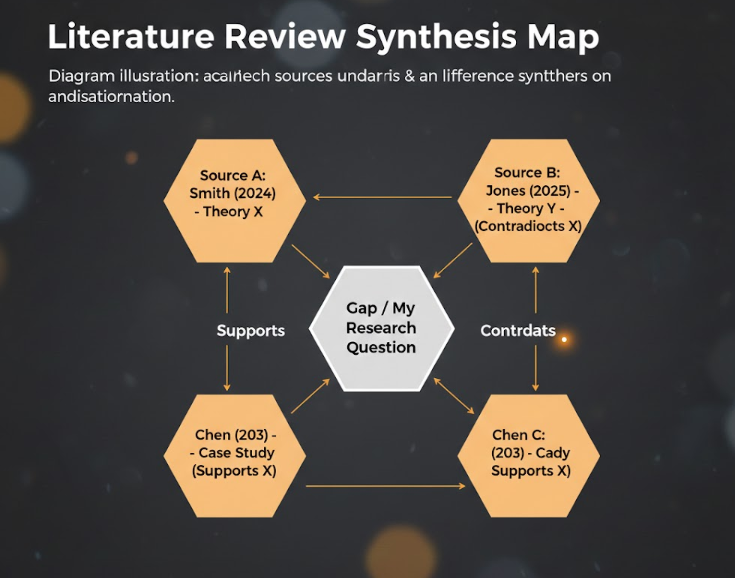
If you find that your source list is overwhelming or you are struggling to connect the dots between complex academic theories, you might search for ways to buy dissertation literature maps or annotated bibliographies to help guide your own reading. Using such resources as a foundation allows you to see how experts group theories together, which you can then apply to your own original writing. The goal is to show that you aren’t just a student reading books, but a scholar participating in a global conversation.
5. Methodology: The Evidence of Rigor
The methodology is the most scrutinized chapter in any dissertation. It is the “how” of your research. You must explain your “Research Philosophy” (are you an Interpetivist or a Positivist?), your “Research Design” (is it a Case Study or an Experiment?), and your “Data Collection Methods.”
In 2026, ethics are more important than ever. You must dedicate a section to how you protected the privacy of your participants and how you handled data security. If you used AI tools for data analysis, you must be transparent about it. A first-class methodology is so detailed that another researcher could read it and repeat your experiment exactly.
6. Results: Presentation Without Interpretation
In the results chapter, you are a reporter. You present the facts and nothing but the facts. Use tables, graphs, and charts to make your data digestible. If you conducted interviews, use direct quotes that represent the core themes of your findings. The key here is clarity. Do not try to explain what the results “mean” yet—that is for the next chapter. Keeping these separate shows the marker that you understand the difference between objective data and subjective interpretation.
7. The Discussion: Where the “First-Class” is Won
The Discussion chapter is the heart of your dissertation. This is where you explain the “So What?” of your findings. You take the results you just presented and compare them back to the literature you reviewed in Chapter 2.
- Do your results support existing theories?
- Do they contradict them?
- Do they offer a new perspective that no one has mentioned before?
This is the chapter where you demonstrate “Critical Thinking.” You aren’t just repeating facts; you are arguing for a specific interpretation of the world. High-scoring students are those who can acknowledge the limitations of their work while still asserting the value of their findings.
8. Conclusion and Recommendations: Looking Forward
Your conclusion should never introduce new information. It should summarize the journey and provide a clear answer to the research question you posed in the beginning. However, a first-class conclusion goes one step further: it offers “Recommendations for Practice.” If you were writing about nursing, what should hospitals change based on your work? If you were writing about business, what should CEOs do differently? This shows that your research has “Real-World Impact,” a major grading criterion in 2026.
9. Referencing and Bibliography: The Technical Finish
Nothing ruins a great dissertation faster than poor referencing. Whether you are using Harvard, APA, or Oxford style, it must be 100% consistent. In the age of digital citations, markers have software that can spot a missing comma in a bibliography in seconds. Take the time to ensure every citation in your text matches an entry in your reference list. It is a tedious task, but it is the final barrier between a 68% and a 70%+.
10. The Importance of Professional Editing
Once the draft is done, the work isn’t over. A first-class dissertation requires at least three rounds of editing. The first is for “Content” (does the argument make sense?), the second is for “Structure” (do the chapters flow logically?), and the third is for “Proofreading” (grammar, spelling, and punctuation).
Because of the sheer length of a dissertation—often 10,000 to 15,000 words—it is very easy to become “word blind.” This is when your brain sees what it intended to write rather than what is actually on the page. This is another area where professional services can be a lifesaver. Having an external expert verify that your tone remains academic and your grammar is flawless can be the final polish that secures your top-tier grade.
11. Final Tips for 2026 Students
- Start Early: The research phase always takes twice as long as you think it will.
- Stay Organized: Use software to manage your references from day one.
- Back Up Your Work: In 2026, “the cloud ate my homework” is not a valid excuse. Use multiple backup systems.
- Health Matters: You cannot write a first-class paper if you are burnt out. Schedule “no-screen” days to keep your mind sharp.
By following this structure, you aren’t just writing a long essay; you are building a professional document that proves your expertise. The dissertation is your chance to shine, to dive deep into a topic you love, and to leave university with a piece of work you are truly proud of.
Frequently Asked Questions
What is the most important section of a dissertation?
While every chapter is essential, the Discussion is often weighted most heavily by examiners. This is where you demonstrate critical thinking by interpreting your results and explaining their broader significance within your field of study.
How long should the introduction be?
Typically, the introduction should account for about 10% of your total word count. Its primary purpose is to provide context, define the research problem, and outline the specific objectives your study aims to achieve.
Can I change my research question after starting?
Yes, it is common for a research question to evolve as you dive deeper into the literature. However, any significant changes should be made before you begin the data collection phase to ensure your methodology remains aligned with your goals.
What is the difference between an abstract and an introduction?
An abstract is a standalone summary of the entire project, including the results and conclusions. An introduction is the opening chapter that sets the stage for the research but does not reveal the final outcomes of the study.
About The Author:
Grace Turner is a dedicated academic consultant and contributing writer for MyAssignmentHelp. With a background in educational strategy and student mentorship, grace specializes in breaking down complex research methodologies into actionable steps, helping students globally achieve their highest academic potential.